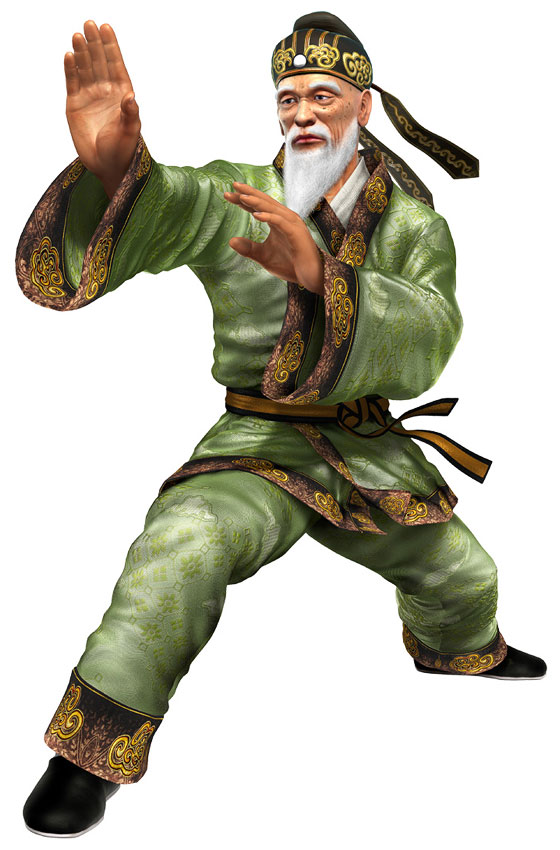
Xing Yi, also known as Xing Yi Quan or Hsing I, translates to Form-Mind Boxing. It is one of the three main "internal styles" of Chinese Martial Arts, the other two being Baguazhang and Tai Chi Chuan. Unlike these two arts, Xing Yi seems to be relatively simplistic, at least at face value, and is extremely focused on the practical effectiveness of its techniques. Do not let that fool you, however; the true power of Xing Yi comes from the unification of mind and body, as its name suggests. It is very much an internal art.
The above summary seems to be the basic common knowledge people can find on this relatively lesser known art.
Recently, I purchased the book "Xing Yi Quan Xue, The Study of Form-Mind Boxing" published by Sun Lu Tang in 1915. Clearly, my copy is a translation, so my review of a book in its original wording will take a long time (if ever. I must learn how to read in Chinese [Mandarin I believe] first... ;p ). Nevertheless, I would like to share a number of interesting details I have learned about Martial Arts history in China.
Today, it seems many people hold on to lofty ideals about the Martial Arts. Perhaps in an effort to maintain the arts, we have romanticized them. Whatever the case may be, prior to the early 1900s, it seems that the Martial Arts were held in poor esteem by the literate population in China, as seen when Sun Lun Tang states, "There was a prejudice in the old days. Literates despised martial arts as martial artists were short of literary learning" (60). This quote highlights the fact that many martial artists of the time were uneducated and often poor.
As the book's editor Dan Miller cites in the introduction, "Prior to the turn of the century the individuals who practiced these arts were primarily uneducated farmers who studied the arts in order to obtain jobs as bodyguards, residence guards and caravan escorts" (Miller, 2). This would point out an important detail that is altogether absent from the practice of most martial arts today, ergo, that martial arts were a means to a living, and as such were learned to allow people with less education and income to be able to make do in their lives. This is the practical origin of the Martial Arts, and it is an origin which, if respected by those who practice, can lead to a clearer knowledge and appreciation for the arts themselves. That being said, it is important to note that all martial arts of old, including Xing Yi, Ba Gua, and Tai Chi, were once employed with the primary purpose of effectively decimating an opponent. They were not, as seen today, merely health exercises or programs for spiritual improvement. These arts were meant to kick ass and put food on the table.
So, I've barely started the book but already it is very enlightening. I wanted, primarily, to point to the notion that the martial arts come from a utilitarian origin, not necessarily an artistic or philosophical one. However, these two things were added after the fact and did, I believe, serve to push the arts forward in their impressiveness. In fact, Sun Lu Tang was a driving force in making the arts palatable to the literate population in China, for he was amongst the first, if not the first, to write and publish about the three internal arts and to further demonstrate the connections the philosophical tenets of Daoism in these arts, notably Ba Gua (Miller 4).
I shall post more as I read along. Expect more blurbs on Xing Yi in the near future.