Friday, May 31, 2013

XING YI 12 ANIMAL FORMS

CHICKEN FORM: JI XING


Ji Xing is the Chicken Form, and it is indeed pretty awesome. Sun Lu Tang asserts that the Chicken (or Cock) is the most useful animal to all mankind, for it announces the dawn. It is able of standing on a single leg, it shakes its feathers, and it's brave enough to brawl (p.188). 

The Chicken Form promotes a healthy brain and healthy legs when practiced correctly. It is related to heaven, and it is the beginning of moving Yin in the body (p.188).

Ji Xing has many movements; indeed, it has more than most of the other 12 animals.


  • The Golden Cock Stands on One Leg: 
    • From the trinity, the right hand stretches out from under the left. The waist, hips, and shoulders follow the right hand. The right leg bends and lifts the heel. The right hand draws back the elbow to the side of the body. Then the right foot steps forward but doesn't touch the ground. Then the right hand pulls back and the left comes up. The left foot lifts as the right foot steps down. Then the left hand pushes downward.
  • The Latter Golden Cock Stands on One Leg:
    • A forward step with the left then the right as the left hand is extended and the right is held back.
  • The Golden Cock Pecking Rice:
    • The right fist hits as in Beng Quan. The left hand hooks on the right wrist.
  • The Former Golden Cock Shakes its Feathers: 
    • Both hands cross, left under right, in front of the chest. The legs are in a horse riding stance.
  • The Latter Golden Cock Shakes its Feathers:
    • The right hand lifts as in Pao Quan while the left hand pulls down towards the left side. The body turns toward the right side.
  • The Golden Cock Stands Up on a Frame:
    • Both fists turn into palms. The right twists inward until the hand goes under the left arm. The left hand and covers the right shoulder. The right leg lefts up.
  • The Golden Cock Announces the Dawn:
    • The right hand lifts up from below in an arc. The left hand draws back to the side. The right foot steps forward.
Afterwards, the form employs splitting fist twice, then "Golden Cock Stands on One Leg," then "The Golden Cock Pecking Rice," then close.

I really like this form. Below are some examples of the Chicken Form being practiced. Notice the variations.




XING YI 12 ANIMAL FORMS

WATER LIZARD FORM: TUO XING

Water Lizard, aka. Alligator, is a flexible form that emphasizes the betterment of the sinews and tendons in the body: It makes your sinews/tendons flexible and strong when practiced correctly (p.180).
Indeed, Sun Lu Tang asserts that the Water Lizard is the "most flexible" animal in the water and that it can "float" (p.180). These are qualities that this form should lend to the practitioner.


The basic motions of the Water Lizard form begin from the Santishi (Three-Harmonies Stance). The rear fist drills up as the lead fist pulls back. As the rear leg pulls up, the rear fist lifts and turns out. As the practitioner steps, the sequence is reversed.

Watch below to see examples of this form being practiced. 


XING YI 12 ANIMAL FORMS

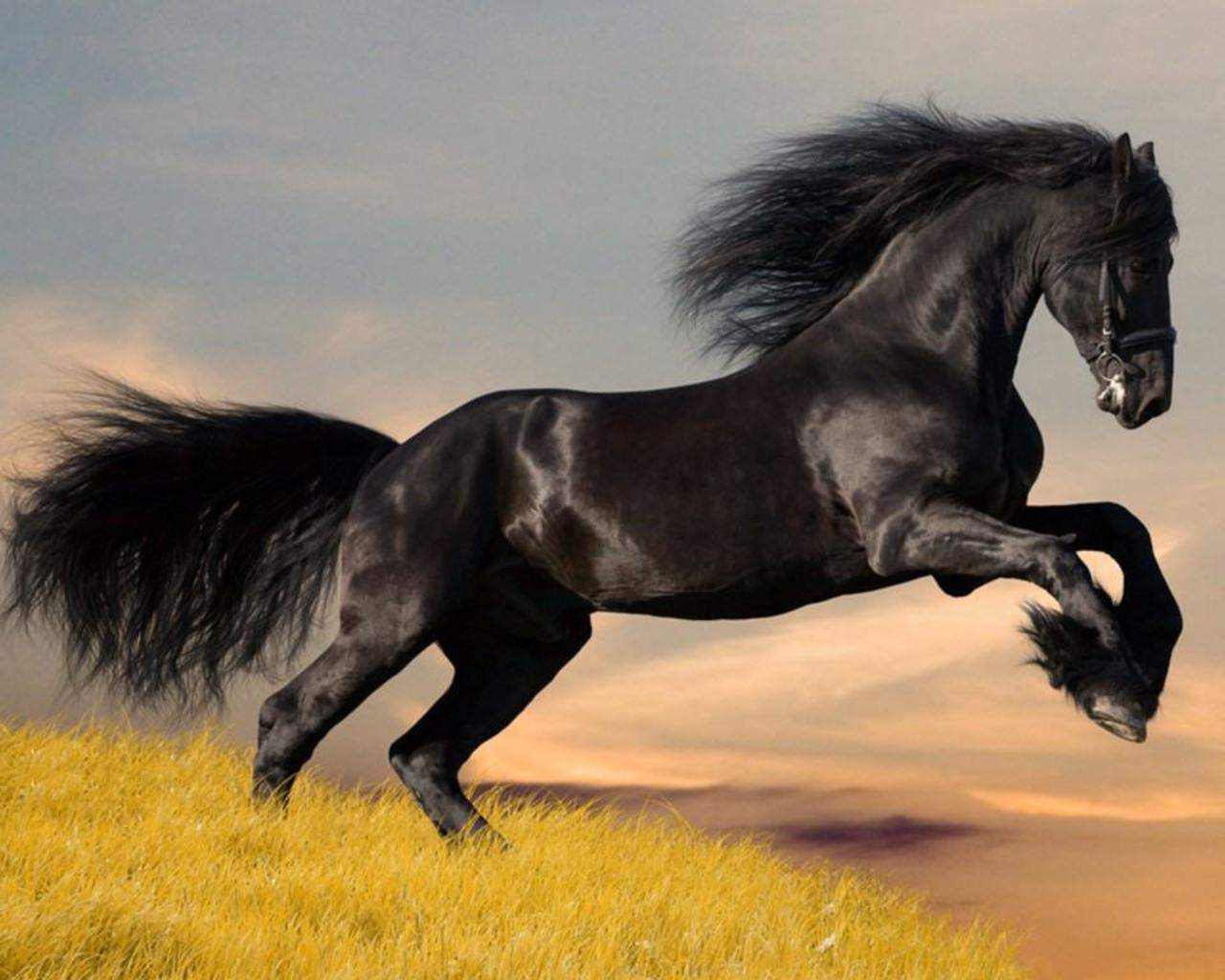
HORSE FORM: MA XING

Sun Lu Tang calls the horse the "most righteous" of animals (p. 174), for it is loyal, and that the consciousness of the "horse form" are "from the heart" (p. 174).  


Then in this chapter, Sun Lu Tang discusses the importance of honesty and sincerity. He states the following: 

             "The old masters said that an honest consciousness produces proper mind. Proper mind leads to perfect assurance. This makes the strength in the boxing faultless and exact. Students should pay attention to this reasoning."

A pretty interesting lesson to take away. This truth is applicable to all endeavors. Basically, don't lie to yourself or others; be who you are, and then you won't hesitate to act appropriately.


Now, in the boxing...

The horse form begins in the trinity, or santi shi stance, as do most if not all Xing Yi Quan forms.

The horse motion steps with the right foot forward in a right angle forward. Meanwhile it draws both wrists inward with the palm of the fists facing up, and the right arm hand stretches under the left.. As soon as the right foot steps forward, the left follows slightly. Then, the wrists turn outward until the palms of the fists face down. The right hand goes out with the right foot and the left hand poises itself back towards the heart. 

Essentially, it seems like a supported hammer/punch strike forward, almost like a battering ram. 

Below are some examples of the horse form being performed. There are varieties, as you will see. 


Wednesday, May 29, 2013

XING YI 12 ANIMALS

MONKEY FORM: HOU XING


The Monkey Form is the "most exquisite" form, and Xing Yi Quan Xue suggests that this style "has the methods of saving energy and of jumping over the mountains" (p. 166). 

This form has the following motions:
  •    Keeping of the Seal: Similar to splitting fist, but performed off of a turn.
  • Dragging of the Rope: Pulling back of the lead foot while the lead arm comes down in front of the abdomen and the rear arm comes up in front of the face in "eagle claw position."
  • Climbing the Rod: A series of short steps where the front foot steps and the opposite hand shoots out.
This form has varieties. Some drop low, many include jumps. However, the basic principles seem to be the same.


Below are several demonstrations of Xing Yi Quan Monkey Form.


Sunday, May 26, 2013

XING YI QUAN 12 ANIMALS 


An Awesome Link!!!

Check this page out for more information on Xing Yi Quan's 12 Animals!!!

XING YI QUAN: 12 ANIMAL FORMS

TIGER FORM: HU XING

          The tiger form has at least two distinct motions, referred to in Xing Yi Quan Xue as "lying tiger leaves its cave" and "hunting tiger catching its captive" (P.158). The first motion seems to be a step with a drawing in of both fists down towards the abdomen. The second motion is a forward step with a double palm strike, where the palms are in the "tiger mouth" position (where the thumb and index finger are open to form a C-shape), with the tiger mouths facing each other.

 In terms of Qi cultivation, this form is supposed to "replenish" the brain when done correctly. 


The following are clips for examples of the Tiger Form.


Saturday, May 25, 2013

XING YI 12 ANIMALS

DRAGON-- "LONG XING"

Xing Yi utilizes the "descending dragon" posture and the "hiding dragon ascending into heaven" posture. 

The first is similar to Pi Quan in the arm motion, but it involves a crouching step. 


The second follows the first, and it involves a drilling fist similar to the one used at the start of Pi Quan, or the one used in Zuan Quan, as the "descending dragon" is reversed. Often this drilling fist involves a vertical leap.


The following demonstrates the Dragon form without the leap. Still very good.


In the following video, it seems the dropping motion is "descending dragon" and the leaping motion is "hiding dragon ascending into heaven."


Sunday, May 19, 2013

XING YI 12 ANIMALS

FORMS AND VIDEOS

Here I want to present videos of the Xing Yi 12 Animal Forms in practice. These are not videos of me but rather demonstrations online by well trained practitioners.


The following videos are by Youtube member Hai Yang. Awesome videos! I love the energy! Check them out!
Xing Yi Animals Form Teaching Part One
Xing Yi Animal Forms Teaching Part Two
PI QUAN INSTRUCTION by SUN JIAN YUN


Found this video on Youtube. I'd say this is priceless. This is a clip of Sun Jian Yun, Sun Lu Tang's daughter, teaching Pi Quan. I think it's an awesome clip. Follow the link below. Please check it out.


Sun Jian Yun teaching Pi Quan
FIVE ELEMENT FISTS

APPLICATIONS


I wanted to present a collection of the different available videos for Five Element Fists and their applications. These are not videos of me, but I think they are informative and useful. Enjoy.


Applications of Pi Quan

Drill for Pao Quan Application


Links to other videos:

Kun Tao Xing Yi- This demonstrates uses for Pi Quan, Zuan Quan, and Beng Quan

Tuesday, May 14, 2013

Xing Yi Quan 12 Animals

The Twelve Animals of Xing Yi Quan

Xing Yi's movements come from two primary sets: the Five Element set and the Twelve Animals set.

The following are Xing Yi's 12 animals:


Dragon


Tiger


Monkey


Horse


Alligator (Water Lizard)


Chicken/Rooster


Sparrow Hawk


Swallow


Snake


Ostrich/Hawk/Phoenix? (Tai Bird)


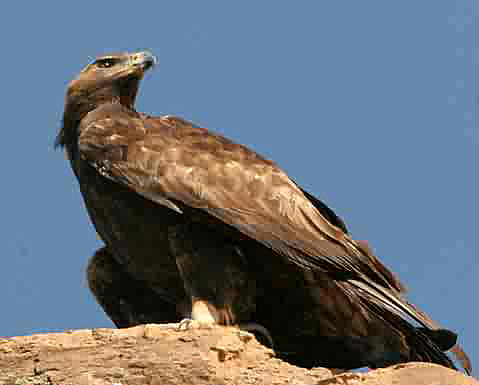
Eagle


Bear


Sunday, May 12, 2013

Five Element Creative/Destructive Form

FIVE ELEMENT CREATIVE/DESTRUCTIVE FORM

Next I'd like to talk about the two-man training form called the Five Element Creative/Destructive Form. This exercise demonstrates the applications of the Five Element fists and shows how the Five Elements lead into (create) and counter (destroy) each other according to the principles of the Wu Xing.


  1. Metal destroys Wood, so Pi Quan counters Beng Quan.
  2. Wood creates Fire, so Beng Quan leads to Pao Quan.
  3. Fire destroys Metal, so Pao Quan counters Pi Quan.
  4. Metal creates Water, so Pi Quan leads to Zuan Quan.
  5. Water destroys Fire, so Zuan Quan counters Pao Quan.
  6. Fire creates Earth, so Pao Quan leads to Heng Quan.
  7. Earth destroys Water, so Heng Quan counters Zuan Quan.
  8. Water creates Wood, so Zuan Quan leads to Beng Quan.
  9. Wood destroys Earth, so Beng Quan counters Heng Quan.

Now, this form is somewhat difficult to completely learn from a book. Furthermore, the internet proves that several interpretations of this form exist. However, they all hold to the principles of the different Element Fists creating and destroying each other. 

In the end, this form can persist endlessly, and thus is circular, just like the Wu Xing cycle.

Saturday, May 4, 2013

HENG QUAN
THE CROSSING FIST OF XING YI QUAN


The Crossing Fist is Xing Yi's Earth fist. The organs associated with the Crossing Fist are the spleen and the stomach. 

Similar to Pao Quan, Heng Quan hits with the rear fist. It is also similar to Zuan Quan where the fist twists outward, the fist heart facing upward upon contact.

Interestingly, Heng Quan defeats Zuan Quan by sidestriking the lead arm. This follows the philosophy that Earth destroys Water in the Wu Xing. However, Zuan Quan is countered by Beng Quan, the Wood Fist, which seems to strike against Heng Quan's unprotected side.

Heng Quan is the fist that I find most difficult to decipher in Xing Yi Quan Xue. It is also the one that is most differently interpreted by practitioners (at least online). 


XING YI QUAN FIVE ELEMENT FIST

PAO QUAN, THE POUNDING FIST OF THE FIRE ELEMENT


Pao Quan, or Pounding Fist, is of the Fire Element. Xing Yi Quan Xue describes it "like a shell shot out from a cannon...has the most intense property in the most vigorous style" (P. 104). 

Being part of the Fire Element, Pao Quan belongs to the heart. It is indeed very explosive.

Looking at this fist, I am intrigued by the fact that it, unlike most of the other Wuxing, or Five Element, fists, uses the rear fist to attack. At least, Pi Quan, Beng Quan, and Zuan Quan all attack with the leading hand. Pao Quan seems to be different. :P

Pao Quan is applied to the inside, where the leading arm intercepts and lifts an oncoming strike just as the rear fist shoots out to hit the heart or ribs. Pao Quan is quick, but can be countered by the uppercutting Zuan Quan fist (as Water trumps Fire). However, Pao Quan is counter to Pi Quan, as Fire destroys Metal in Xing Yi.
ZUAN QUAN

The Drilling Fist of Xing Yi Quan


Drilling Fist is of the Water Element. It is said in Xing Yi Quan Xue that "when drilling upward, it is like a spring spurting suddenly out of the ground" (p. 98). 

The Water Element is of the Kidney. The Qi in this fist should be "in the shape of running water" (p. 98)

The drilling fist looks like an uppercut. It's pretty interesting to watch. Definitely a prominent use of same foot same hand to strike. 

Xing Yi is an internal style, which means that the drills and movements are simultaneously focused on Qi cultivation and also application.

In terms of application, Zuan Quan can be used to counter from the inside. The rear arm redirects an oncoming strike while the lead arm drills up to the opponents chin. As such, it counters the Fire fist, Pao Quan, following the Wu Xing principle that Water destroys Fire. On the other hand, it is countered by Crossing Fist, which seems to hit the drilling hand out from the outside with the rear arm. This follows the principle that Earth destroys Water in the Wu Xing.